
Posted by Security Boss Pet Doors on Apr 17th 2026
How to Choose the Best Pet Door for Large Dogs
Not all pet doors are built to handle large dogs.
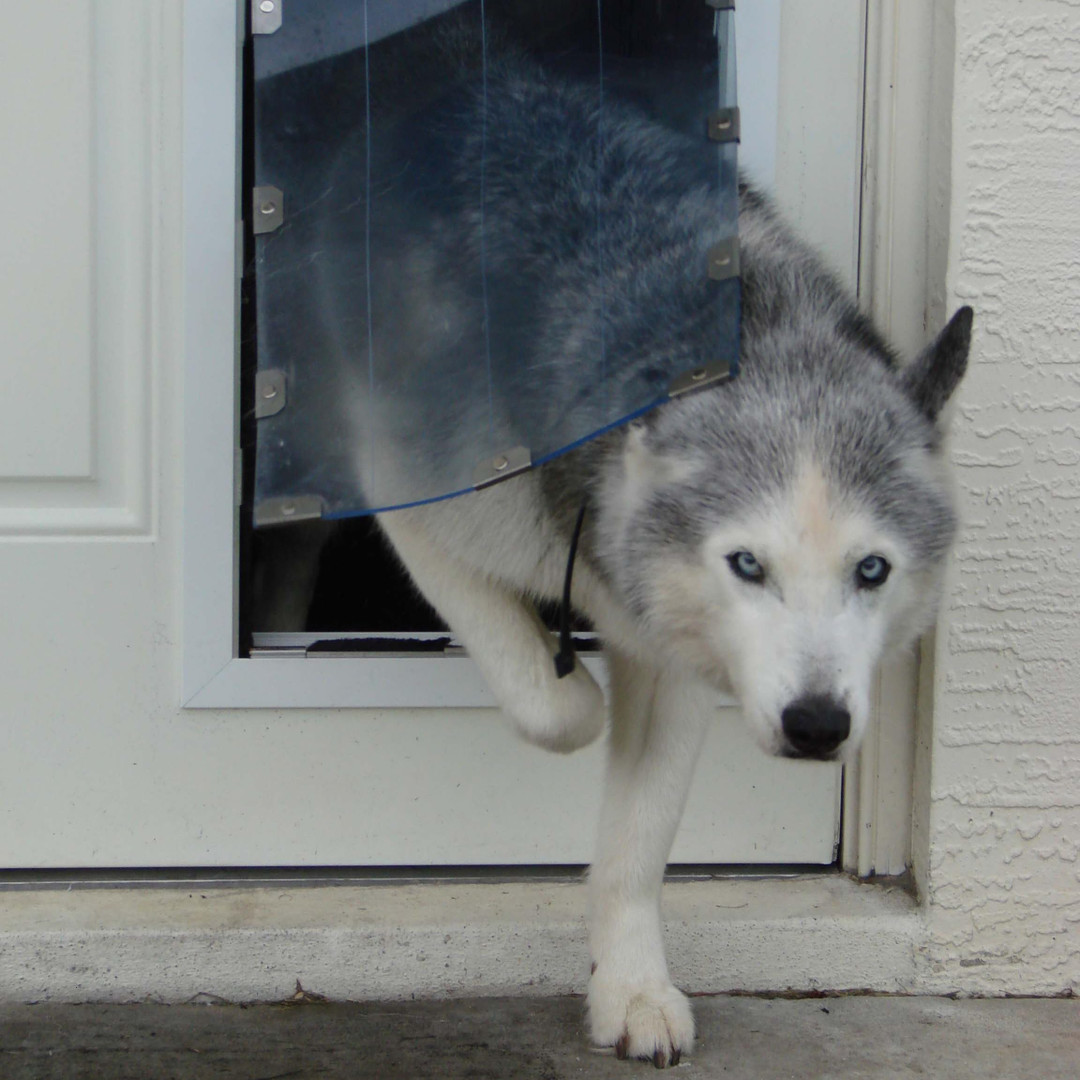
If you have a Labrador, German Shepherd, Golden Retriever, or any other large breed, choosing the right pet door is critical. A door that works for a small dog may fail quickly under the size, strength, and daily use of a larger animal.
From durability to sizing to long-term performance, there are a few key factors every homeowner should consider before making a decision.
Here’s how to choose a pet door that will actually hold up to large dogs.
Size Isn’t Just About Height
When selecting a pet door for a large dog, many people focus only on height—but width matters just as much.
Large dogs often have broad shoulders and need enough space to move through comfortably without squeezing. A door that’s too narrow can cause hesitation or inconsistent use.
Measure both:
- Shoulder height (add 1–2 inches)
- Width across the chest (add 1–2 inches)
This ensures your dog can move through naturally and confidently.
Strength Is Non-Negotiable
Large dogs bring more force every time they use the door.
Thin plastic frames and lightweight components may not withstand repeated impact. Over time, this can lead to cracking, loosening, or complete failure.
A pet door for large dogs should include:
- Heavy-duty frame construction
- Reinforced mounting points
- Durable flap materials
- Commercial-grade hardware
The stronger the structure, the longer the door will last.
Flap Design Matters
The flap is one of the most used components of any pet door—and with large dogs, it needs to be up to the task.
A quality flap should:
- Move smoothly without excessive resistance
- Return to a closed position reliably
- Resist warping or tearing over time
Flaps that are too thin may wear out quickly, while flaps that are too stiff can discourage use. The right balance ensures durability without sacrificing usability.
Sealing and Insulation Still Matter
Just because you need a larger opening doesn’t mean you should sacrifice energy efficiency.
Larger pet doors can allow more potential heat transfer if they’re not properly sealed. That’s why strong magnetic closures and precision fit are essential.
For homes in colder or hotter climates, a dual-flap design can provide additional insulation—helping maintain indoor comfort even with a larger opening.
Built-to-Order Makes a Difference
Large dogs often fall outside the “standard” sizing used in mass-produced pet doors.
Built-to-order pet doors allow you to match the opening precisely to your dog’s size and your installation needs. This improves both comfort and performance.
Instead of forcing your dog to adapt to a generic size, the door is designed specifically for them.
Long-Term Durability Saves Money
With large dogs, wear and tear happens faster—especially with lower-quality products.
Choosing a pet door with replaceable components allows you to maintain performance over time without replacing the entire unit.
This is especially important for larger doors, where replacement costs can be higher.
Built for Bigger Pets
Large dogs need more than just a bigger opening—they need a stronger, more durable, and better-engineered solution.
By focusing on proper sizing, strong materials, reliable sealing, and long-term maintainability, you can choose a pet door that performs consistently for years.
The right pet door doesn’t just fit your dog—it keeps up with them.