
Posted by Security Boss Pet Doors on Mar 27th 2026
How to Choose a Pet Door That Won’t Increase Your Energy Bills
One of the biggest concerns homeowners have about installing a pet door is simple:
“Will this drive up my energy bills?”
It’s a valid concern—and the honest answer is: it can, if you choose the wrong product.
A poorly designed pet door can act like a constant opening to the outside, allowing heated or cooled air to escape and outdoor air to enter. But a well-engineered, high-quality pet door can minimize energy loss and maintain your home’s comfort.
Here’s how to choose a pet door that works with your home—not against it.
Start With a Proper Seal
The most important factor in energy efficiency is how well the pet door seals when it’s closed.
Low-quality pet doors often have:
- Weak magnets
- Misaligned flaps
- Gaps around the edges
These issues allow air to move freely in and out of your home.
A high-quality pet door uses strong magnetic sealing systems and precision-fit flaps that close tightly every time. This prevents drafts and reduces energy loss.
If the flap doesn’t close securely, your energy efficiency will suffer—no matter what else the door offers.
Look for Dual-Flap Designs
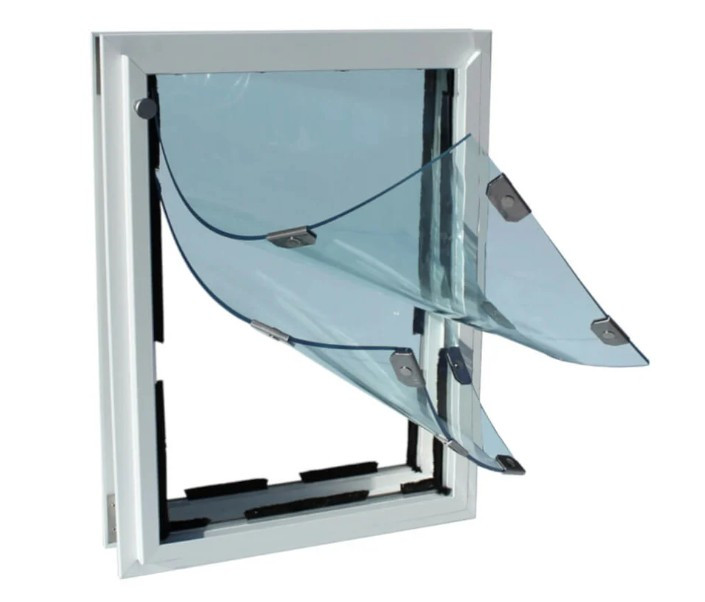
One of the best ways to improve insulation is by choosing a dual-flap pet door.
Dual flaps create an air pocket between the inner and outer layers, which helps reduce heat transfer. This added barrier can significantly improve performance in both hot and cold climates.
While single-flap doors may be sufficient in mild conditions, dual-flap designs are a smart choice for homeowners looking to maximize energy efficiency.
Choose Strong, Stable Materials
The materials used in the pet door play a major role in long-term performance.
Plastic frames can warp or shift over time, leading to gaps and poor sealing. As the structure weakens, energy loss increases.
Durable materials like aluminum provide a rigid, stable frame that maintains proper alignment. This ensures the flap continues to seal correctly, even after years of use.
Consistency is key when it comes to keeping outside air where it belongs.
Make Sure It Fits Correctly
Even the best pet door won’t perform well if it doesn’t fit properly.
Mass-produced doors are designed to fit a wide range of applications, which can lead to loose installations or gaps around the frame.
Built-to-order pet doors are designed for a precise fit, reducing air leakage and improving overall efficiency.
A tight, secure installation is just as important as the door itself.
Don’t Oversize the Opening
Bigger isn’t always better.
Installing a pet door that’s larger than necessary creates a bigger opening for potential heat loss. Choosing the correct size for your pet helps balance comfort and efficiency.
Measure your pet carefully and select a door that provides enough clearance—without unnecessary excess space.
Think Long-Term Performance
Energy efficiency isn’t just about how the door performs on day one—it’s about how it performs over time.
Flaps wear down. Seals degrade. Magnets weaken.
Choosing a pet door with replaceable components allows you to maintain proper sealing and efficiency for years to come.
Instead of watching performance decline, you can restore it as needed.
A Better Door Means Better Efficiency
A pet door should provide convenience without compromising your home’s comfort.
By focusing on sealing, materials, fit, and long-term maintainability, you can choose a pet door that minimizes energy loss and performs reliably in all seasons.
The right pet door doesn’t increase your energy bills—it helps you keep them under control.